
Red’s Run - 2026 Remake
One year ago, I made a concept trailer reimagining Little Red Riding Hood as a cyberpunk gritty reboot.
I documented all my workflow and technical stuff HERE.
I just remade it, to see how far things have actually come in the AI filmmaking space.
The story: A mercenary courier, a gangster in a brutalist wolf helmet, a robot hunter, a crime lord grandmother with chrome eyes. It’s a whole thing.
Same world, same characters, same everything: one year later.
Here's April 2026:
And here's April 2025:
Why Remake It
I wanted to do a hardcore test of where AI filmmaking actually is right now.
Not a demo reel, not a style exercise: a direct comparison. Same concept, same characters, etc etc, the only variable being the tools. A controlled creative benchmark.
The current state-of-the-art model is Seedance 2.0. In a year, it'll probably be something else. Maybe I just turn this into a yearly thing 🤔
The original Red's Run was made across something like six different tools over about 10 days. Runway 4 + Veo 2 + Imagen 3 + a bunch other tools , and manual sound design.
This version was made primarily on Seedance 2.0, in about a day and a half. And it's twice as long.
What got better? What's still hard?
2025 High Speed Action Scene
2026 High Speed Action Scene
2025 The Grandmother’s Prisoner Scene
2026 The Grandmother’s Prisoner Scene
What Changed In My Process
These tools are all about collapsing friction. And because the friction keeps shrinking, I don't think I need to walk you through an intricate tutorial. You'll find your own way to work with them. That's kind of the point.
But here's the top line.
Stills Are Still Everything
The foundational element is always stills. You need locked character references and location references before you touch video. It's the modern AI filmmaking equivalent of storyboards and mood boards. That hasn't changed. What's changed is everything around them.
In 2025, I was building the entire frame as a still before touching video. Every shot was a complete image: character in location, doing the thing, with final color grading and look, essentially a screenshot from the movie that didn't exist yet. That meant generating across multiple tools, then heavy compositing in Photoshop: hand-building HUD elements, patching jacket details layer by layer, upscaling through Magnific. Only once I had a polished, finished frame would I feed it to Runway 4 or Veo 2 with a text prompt to animate. Prompt adherence wasn't great, so it took way more gens to land anything close. Sound wasn't there yet either, so all sound design was manual.
In 2026, the workflow flips. Instead of building a finished frame, I give Seedance 2.0 character reference sheets, sometimes multiple characters in the same prompt, and describe the scene. The model builds the frame. I still use location references when needed, though by this point I had a library of location prompts that were consistent enough to work on their own. The compositing that used to live in Photoshop has been replaced by natural language editing in Nanobanana. Photoshop becomes a final 5% glow and polish. And prompt adherence is dramatically better; I can describe what I want and mostly get it on the first few tries.
RED - Hero Wardrobe
RED - Alt Wardrobe
THE WOLF
THE WOLF’s Helmet Detail
THE GRANDMOTHER
THE MARKSMAN
The Workflow In a Nutshell
Lock character designs → Build character sheets (front/back/side) → Develop consistent descriptive language for characters, locations, lighting, lenses → Use prefix/suffix prompt structure so every shot lives in the same film → Generate clips with multimodal prompts (text + image) → Edit manually (music, pacing, titles)
The native audio on SeeDance is a beast. I always prompt for no music, just sound design. The native sound design is incredible. This way I can work with music separately, which in this case was generated with Suno AI.
And the camera. The camera movement on this model is genuinely incredible. Smooth, cinematic, and for action sequences it's a dream. Fight scenes, people trading blows on rooftops: so, so good. No model has been able to touch it before. Makes me want to just do a mixtape of back-to-back fights with no story at all.
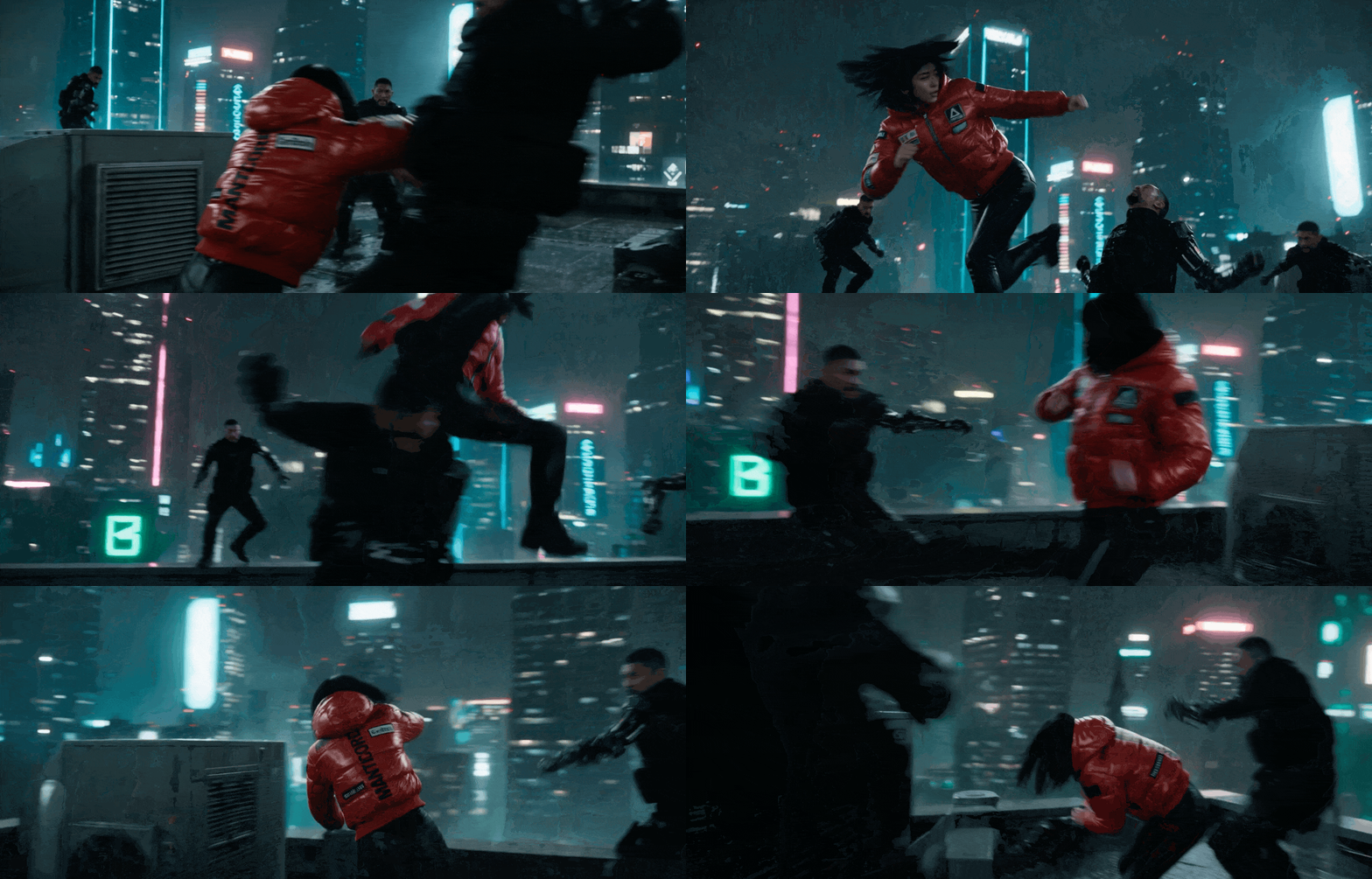
One of the many unused rooftop fighting clips…
A Small Gift 🎁
You should be using LLMs to help you write and standardize your prompts. Create a template with a consistent prefix/suffix that captures your overall vision, and use it across the whole project. Pair it with consistent descriptions of your recurring characters alongside their reference sheets.
Here are the custom instructions I made to automate this process. Paste them into your fave LLM to use it as a Claude Project or Gemini Gem. Use it to create your own. Drop your idea in and it'll expand it into a rich natural language prompt and a JSON version.
Download: SeeDance Prompt Assistant
What’s Still Hard
Moderation is aggressive and genuinely infuriating at times. There were entire sequences from the original I couldn’t recreate with S2. The sniper scope POV from the original : gone, because guns aimed at camera trigger content filters. Characters standing near building edges, certain action framing, even a sleeping homeless figure in the background : all flagged, all requiring workarounds or cuts.
I tried to replace some of the lost shots with new ideas. One was the Wolf casually walking out of a corporate elevator full of corporate people, slinging a grenade back over his shoulder as the doors close. The model generated the first thumbnail and the moderation instantly clawed it away. Makes the blood boil.
You learn to reframe, literally and creatively, but it's real friction. Generation isn't instant, either. And the moderation rejections eat into your time in ways that don't show up in the "it only took a day" narrative.
The tools are powerful. They are not yet frictionless.
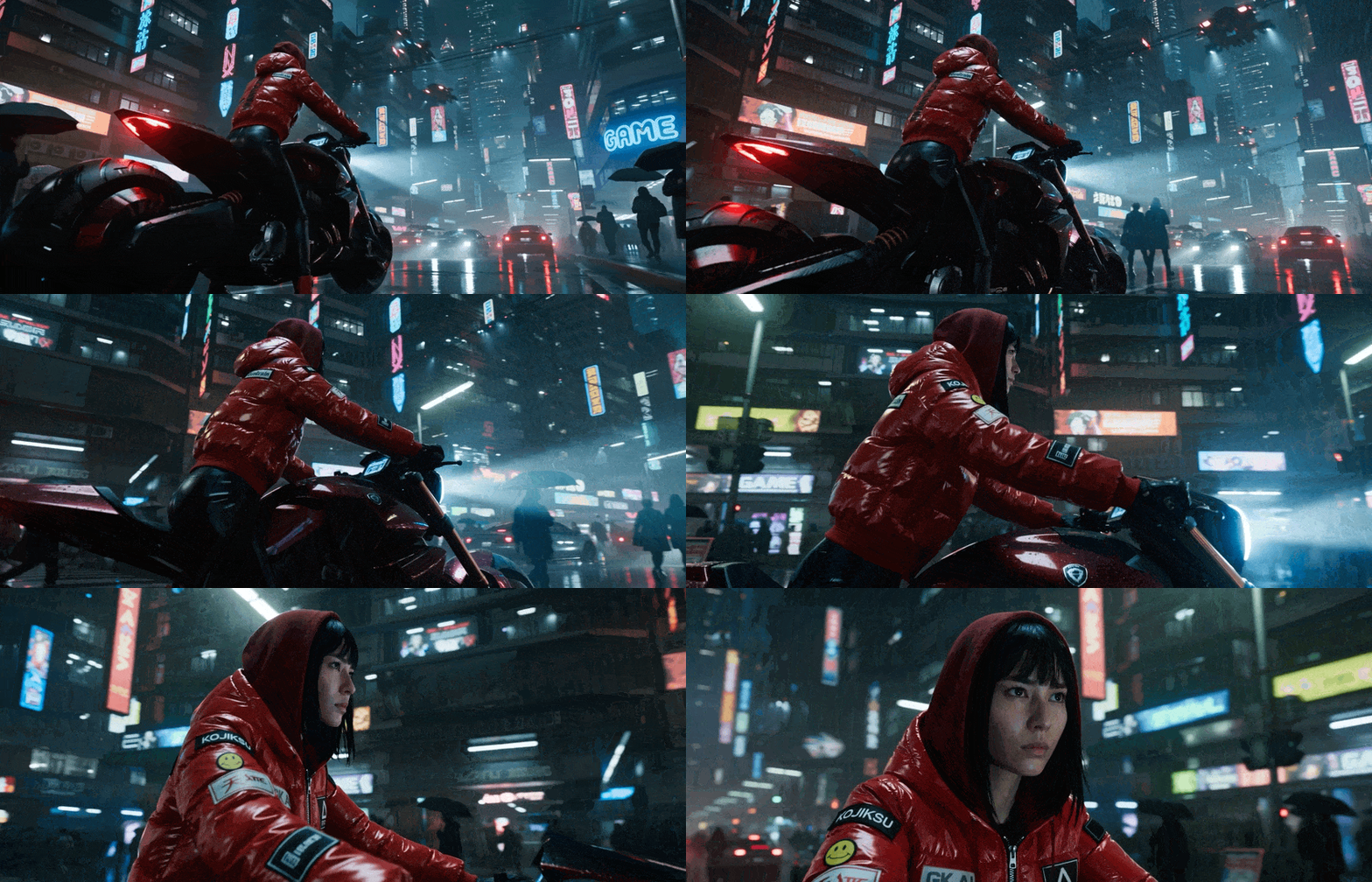
Where Next ?
It's kind of wild to sit with something that feels this cinematic and know that in a year it'll look quaint.
Higher resolution, better prompt adherence, faster generation, fewer moderation headaches. The acceleration just keeps accelerating.
But the constant across every gen of these tools is the same: human creative direction. The character bibles. The visual references. The taste. The decisions about what to make and why. That part doesn't automate.
I have a screenplay called The Story That Ended Us. It's been finalized for over 18 months. A proper short film, about 13 minutes, five fully fleshed-out characters, lots of dialogue. The plan has always been for it to be a fully realized AI short film (unless you want to give $3 million?), but I've been sitting on it, waiting for the tools to catch up. That thing needs something different from Red's Run. Not action and camera movement, convincing dialogue. Facial nuance. The subtlety of back-and-forth conversation. Eye contact that means something.
This model makes me feel like we're very very close.
If you're one of the few people who actually read these things all the way to the end, watch this space. Hopefully I'll be able to bring it to life soon.