
And then...
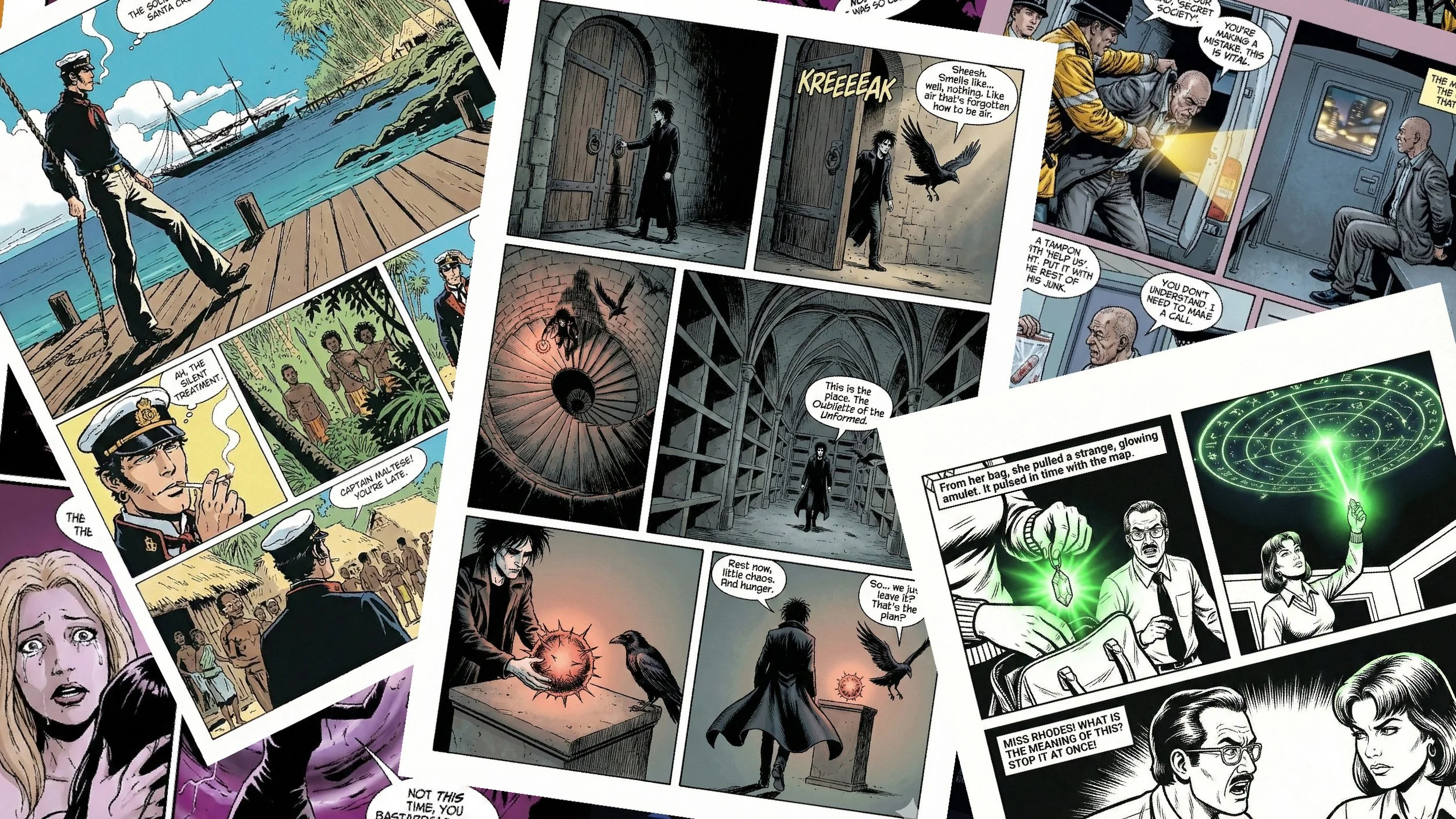
Most things I post here start with an idea. Something I want to make. AI is the tool, but there's usually a vision driving it.
This one's different. I just wanted to test an AI model in a way I hadn't seen done before.
So I handed it a single comic book page and just asked it to continue the story.
Comics are an interesting medium for this. It’s just still images, but it’s multimodal in its own way: maintain a visual style, keep character consistency, follow panel logic, and actually tell a story. I wanted to see how far it could hold all at once.
Built a custom prompt, fed it one page from a few titles I love, and let it rip for five pages each.
With Nano Banana Pro 🍌
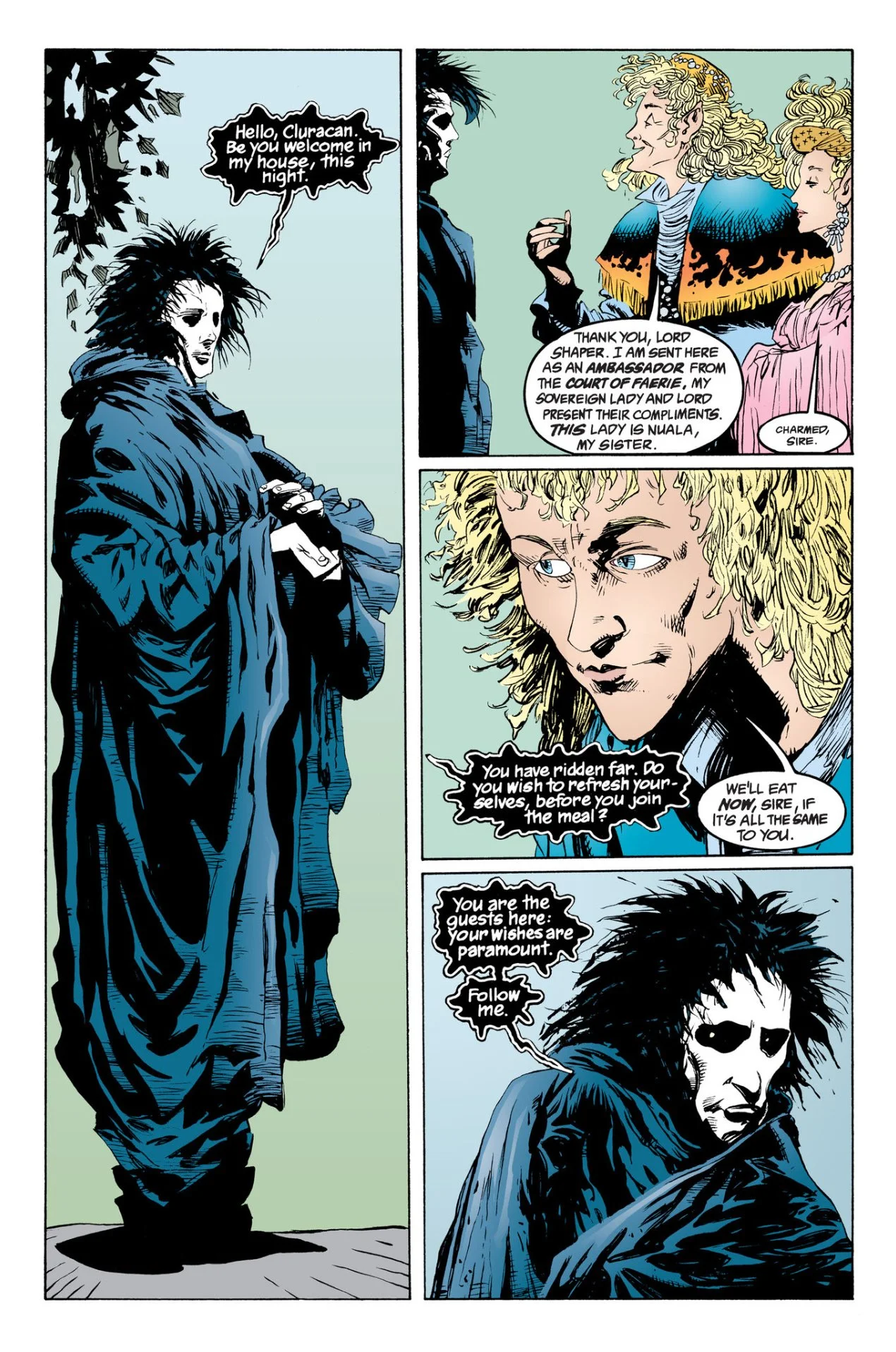
ORIGINAL PAGE:
Sandman #26
Started with a personal favorite.
A page from Sandman #26, Neil Gaiman & Kelley Jones.
WHERE THE AI TOOK IT…
Interesting thing here: few pages in, the model introduced existing characters from the lore: the raven Matthew and the librarian Lucien.
I never mentioned Sandman by name in my prompt, but this is one of the most iconic comics ever made, so there's a real chance it had prior knowledge of this universe from training data.
The pacing felt off though. Rushed, like it needed to introduce some impending menace before it had earned it. Didn't feel like Gaiman.
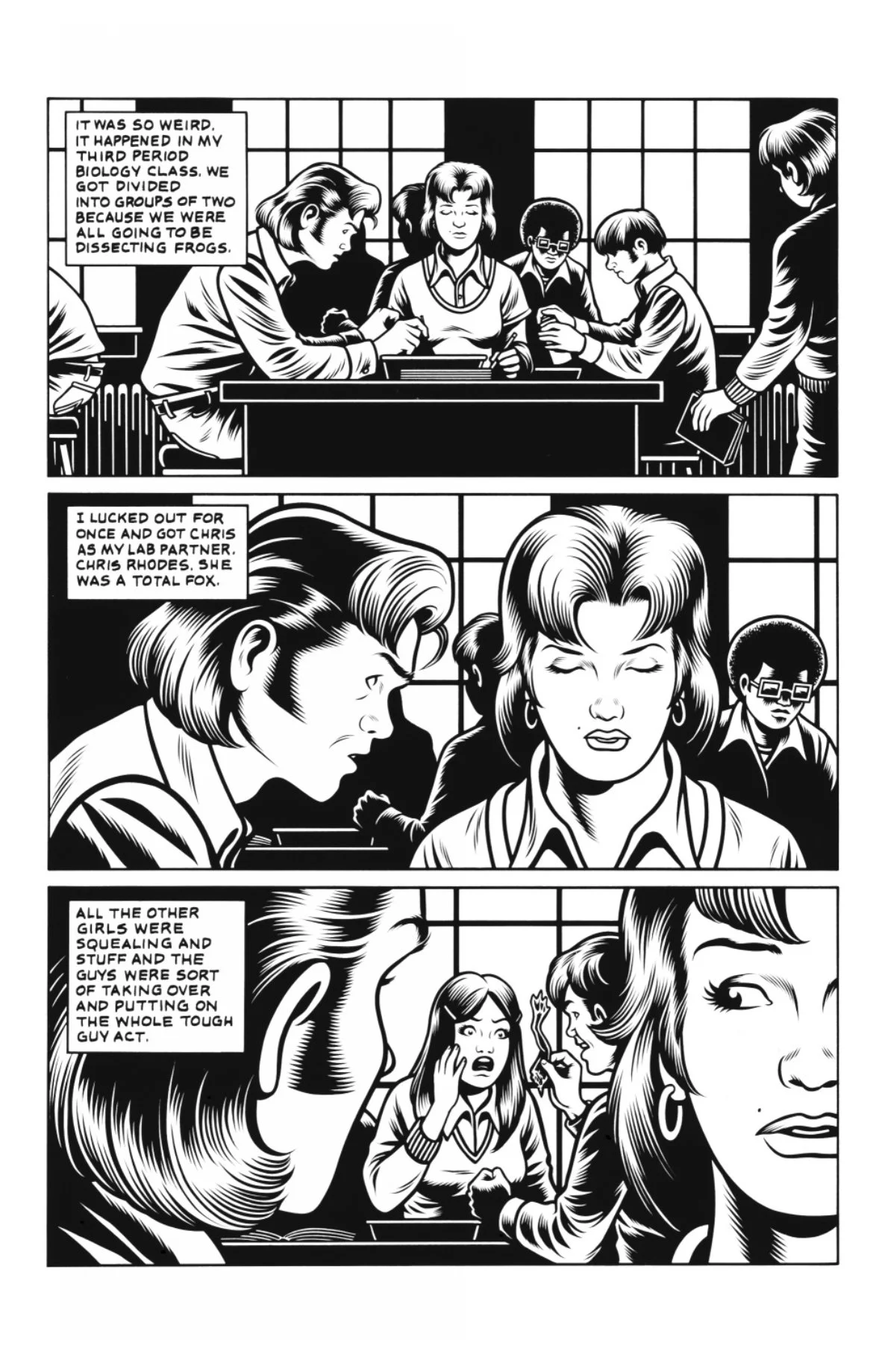
ORIGINAL PAGE:
Black Hole #26
A page from the first edition of Black Hole by Charles Burns. Wanted to see what happens with titles that have a bit less cultural footprint.
WHERE THE AI TOOK IT…
This one held the black and white contrast pretty well, but nowhere near Burns' precision.
In terms of tone and atmosphere, it actually nailed the Burns vibe more than I'd expect: the coming-of-age meets body horror thing the original series was known for.
The linework loosens up compared to the original, but the tone stays in the right neighborhood.
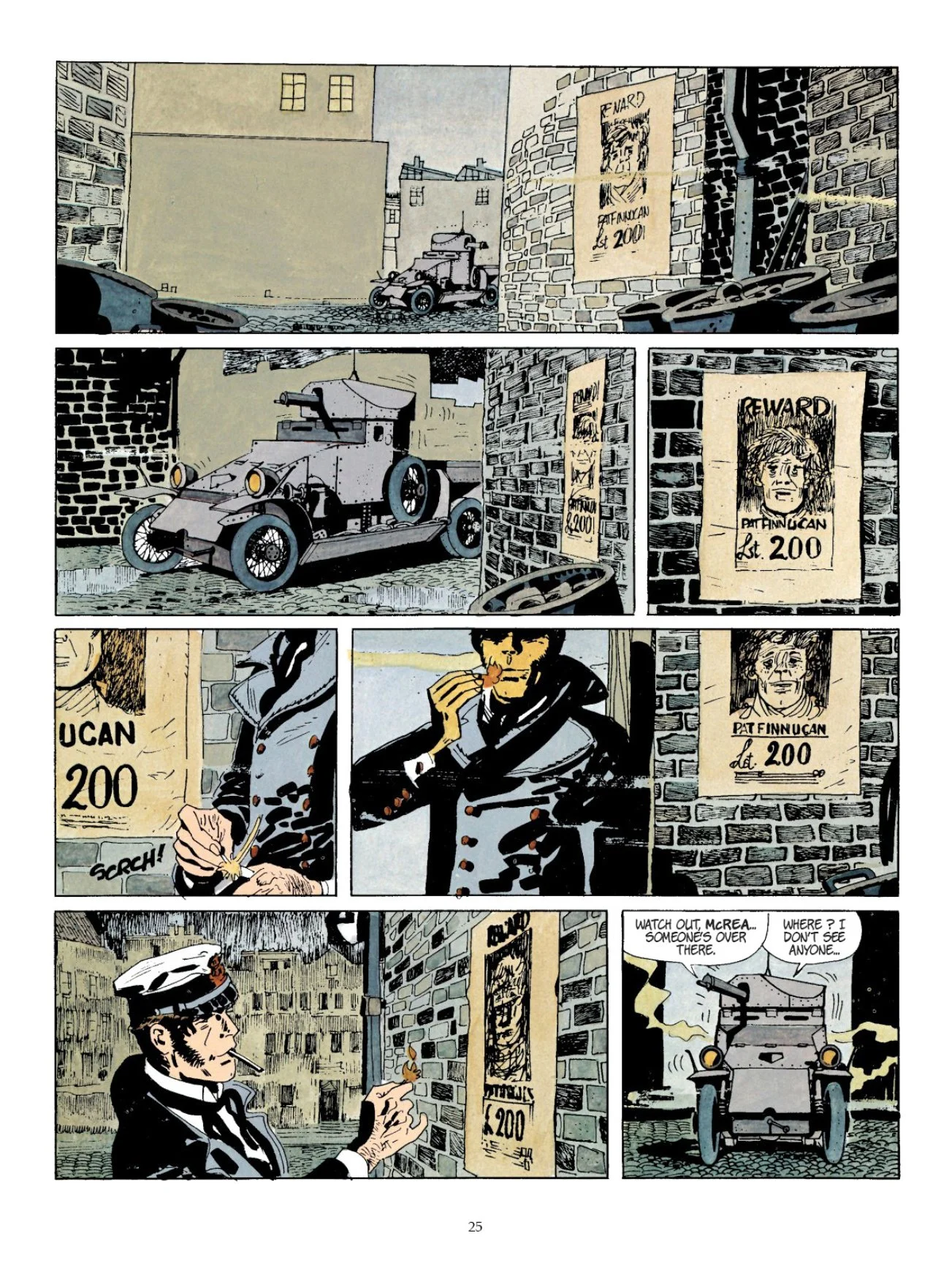
ORIGINAL PAGE:
Corto Maltese: The Celts
Throwing in something from the European tradition. Hugo Pratt's line work is iconic and very specific, so a good test.
WHERE THE AI TOOK IT…
Some genuine spatial intelligence in the generated pages. The second panel on page #2, where it switches to the POV of the dudes inside the armored vehicle looking out through the hatch… that's an honestly impressive compositional choice. Scene blocking and POV work better here than in any of the other tests.
The style is another story. Pratt's ink work is very stylized with lots of negative space. The model traded that for something more rendered and straight from Genericsville. Though it's almost funny: once it settles into that ugly generic look, it actually stays consistent there.
Story-wise it reads like a somewhat plausible Corto adventure: wartime intrigue, sketchy docks, morally ambiguous characters. The pacing felt more natural here too, less rushed than the others.
All Experiments Need Conclusion, Right?
Narrative-wise: honestly better than I expected. The model picked up tone and pacing in ways that felt like more than just pattern matching.
Visually, character consistency impressed me. Art style is where it gets interesting: the first couple of generated pages hold the style reasonably well, but by page 3 or 4 things start to decohere. It morphs into something generic with a certain AI-slop flavor. Like watching someone do a really good impression that slowly slides back into their own voice.
None of the generated pages fully capture the soul of the originals. But hey, I remember MS-DOS. The fact that I can ask a computer to draw the next page of Sandman and it just... does? Still feels hyper futuristic to me.
This isn't me saying comic artists and writers should be nervous. Or rather, I'm sure they are, same as the rest of us in any creative field right now.
But maybe these tools end up changing how writing, illustrating, and inking workflows talk to each other… for better or worse.
I pray it doesn't slop-ify the medium the way it's already starting to elsewhere.